SAVOR…Chicago Earns First Convention Center Certification

by Doug Bradley, SAVOR…Vice President of Culinary

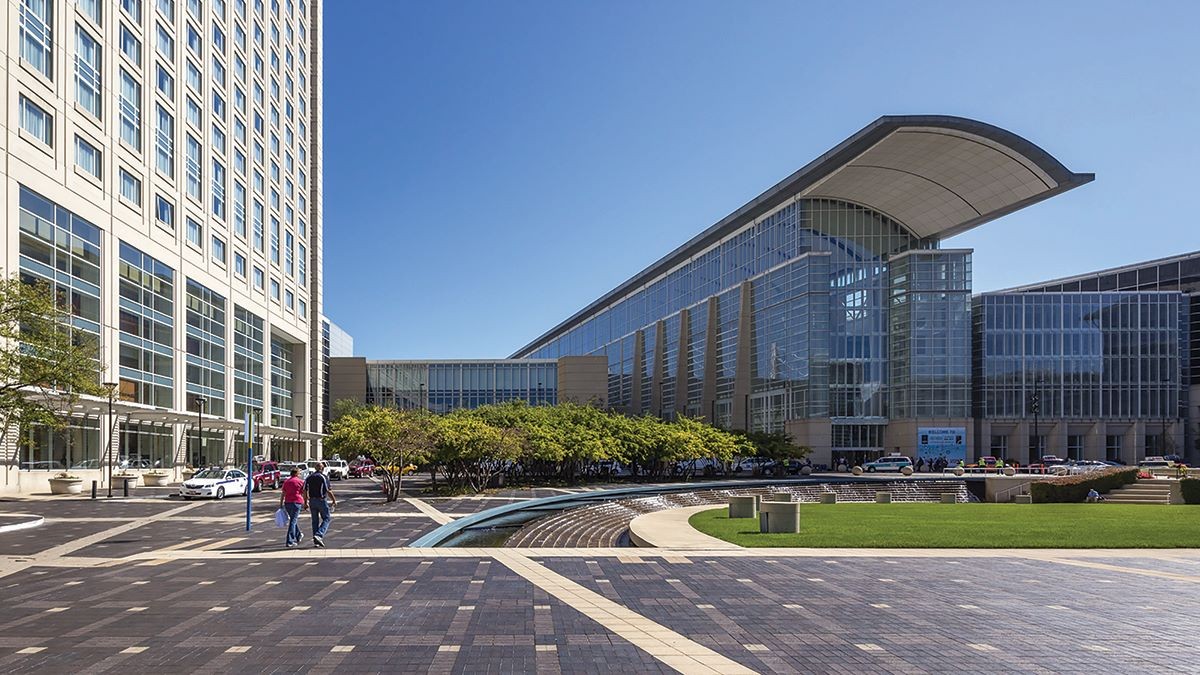
Managing food service waste in a convention center is an immense challenge. Chicago’s McCormick Place, the largest convention center in the Americas, draws almost 3 million visitors each year. SAVOR… Chicago takes the responsibility and opportunity to manage our business sustainably very seriously, a commitment that led us to be the first convention center in the world to receive Green Seal certification for sustainable restaurant and food services. Sustainability is embedded in everything we do. One of our most exciting challenges is to seek out new innovations that enable us to drive continual improvements. Every year, more than 30% of our country’s food supply — 133 billion pounds – is sent to landfills, where it emits potent methane gas into the atmosphere instead of feeding millions of people. As the official food service provider of McCormick Place, SAVOR…Chicago has more than doubled our waste diversion rates since 2011. While much of this increased diversion comes through food donations within our community and visitor education, we’re also undertaking new approaches like the Grind2Energy food-waste-recycling system.

https://youtube.com/watch?v=_KqhREQauhs

Making its McCormick Place debut this week at the 2019 National Restaurant Association Show, our Grind2Energy system will allow us to divert nearly 100% of pre-consumer organic waste. Grind2Energy’s technology combines a specialized grinder that processes food trim and scraps into slurry that will be stored onsite, in a safely sealed 8,000 gallon tank. As needed, the slurry is transported to a local anaerobic digestion facility, where microbes will break down the material to extract methane for energy production and to produce a nutrient-rich fertilizer. Minimizing waste is a challenge we fight daily through steps large and small; adding this tool that both eliminates waste and creates usable energy is a win for all of us. Also at the National Restaurant Association Show, SAVOR…Chicago is pleased to launch a new Green Seal promotion to the show’s more than 40,000 attendees and food industry leaders through digital menu messaging promoting Green Seal certification. We have found that education is one of the most powerful tools available to help spread the message that we can do so much more with less.  

Doug Bradley is Vice President of Culinary at SAVOR. He leads SAVOR’s talented team of 80+ chefs around the country and also manages SAVOR…Chicago. Classically trained as a graduate of the Culinary Institute of America, Doug has 20+ years of industry experience in high profile organizations.

Green Cleaning is an Organization-Wide Effort at NC State

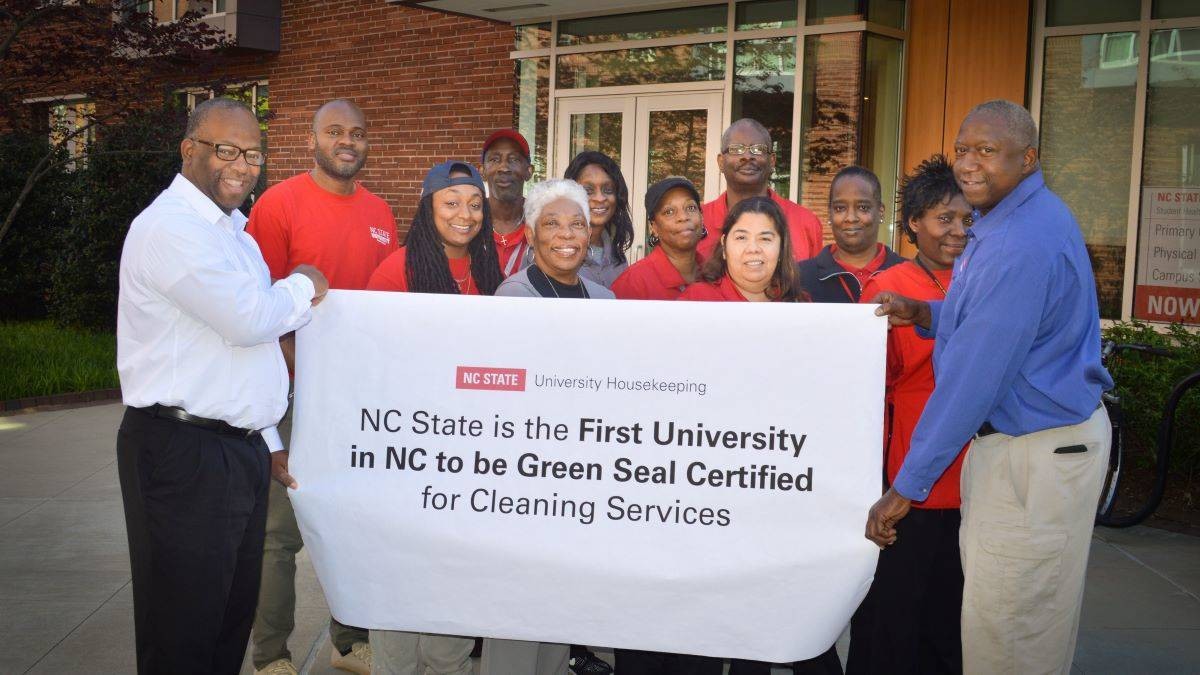
North Carolina State University’s certified green cleaning program has generated a host of benefits for the campus community, including improved air quality, reduced operational costs, and improved employee health and morale. To maintain Green Seal certification, University Housekeeping will be reevaluated annually to ensure its cleaning products, processes and employee training meet leadership levels.

PILOT GREEN-CLEANING PROJECTS LED TO CAMPUS-WIDE ADOPTION

 “NC State began its shift toward green cleaning more than a decade ago as increased awareness of environmental and human health prompted many manufacturers to develop eco-friendly options. First, University Housekeeping tried a chemical-free cleaning solution made of ionized water and salt. Not only did it work on campus, but it saved money and was safer for building occupants and housekeeping employees. With that success, NC State continued pilot green projects that led to campus-wide adoption. Housekeeping also found safe, effective alternatives to aerosols and harsh chemicals. They use many Green Seal certified cleaning chemicals and hand soap to protect indoor air quality and reduce chemical exposure.”
CARLA DAVIS
University Sustainability Office

WE’RE LOOKING OUT FOR THE HEALTH OF OUR EMPLOYEES, CUSTOMERS AND THE ENVIRONMENT

“We’re looking out for the health of our employees, customers and the environment. What makes us stand out is that we adopted green products early and saw benefits early. We were very progressive in making our products and processes better.”
HEZEKIAH HENRY
Supervisor – University Housekeeping

We’re looking out for the health of our employees, customers and the environment.

GREEN SEAL EXAMINES ABSOLUTELY EVERYTHING YOU DO

“Green Seal examines absolutely everything you do. They verify every chemical, every piece of equipment, your cleaning process, your training program. They leave no stone unturned. It is rigorous and comprehensive and helped us standardize our cleaning program in every building. This certification shows our commitment to sustainability and helps us become a leader.”
VINCENT TAYLOR
Deputy Assistant Director – University Housekeeping

GREEN SEAL CERTIFICATION HAS GIVEN OUR STAFF GREATER PRIDE IN WHAT THEY DO

“Our staff have to know the reasoning behind our process and the difference between cleaning and green cleaning. There’s a lot that goes into that, and Green Seal certification has given our staff greater pride in what they do.”
TONY BROWN
Supervisor – University Housekeeping

I COULD NOT BE PROUDER OF THE ENTIRE UNIVERSITY HOUSEKEEPING TEAM

“Green Seal Certification affirms our dedication to sustainability and the health of our employees and the campus community. I could not be prouder of the entire University Housekeeping team.”
ADA BALDWIN
Director – University Housekeeping

OUR EMPLOYEES HAVE LESS CHRONIC ILLNESS AND ERGONOMIC PROBLEMS

“Our industry is much more concerned with employee health than it was before. With our green cleaning program, our employees have less chronic illness and ergonomic problems.”
TAFT WALDON
Deputy Assistant Director – University Housekeeping

Green Cleaning is an Organization-Wide Effort at NC State

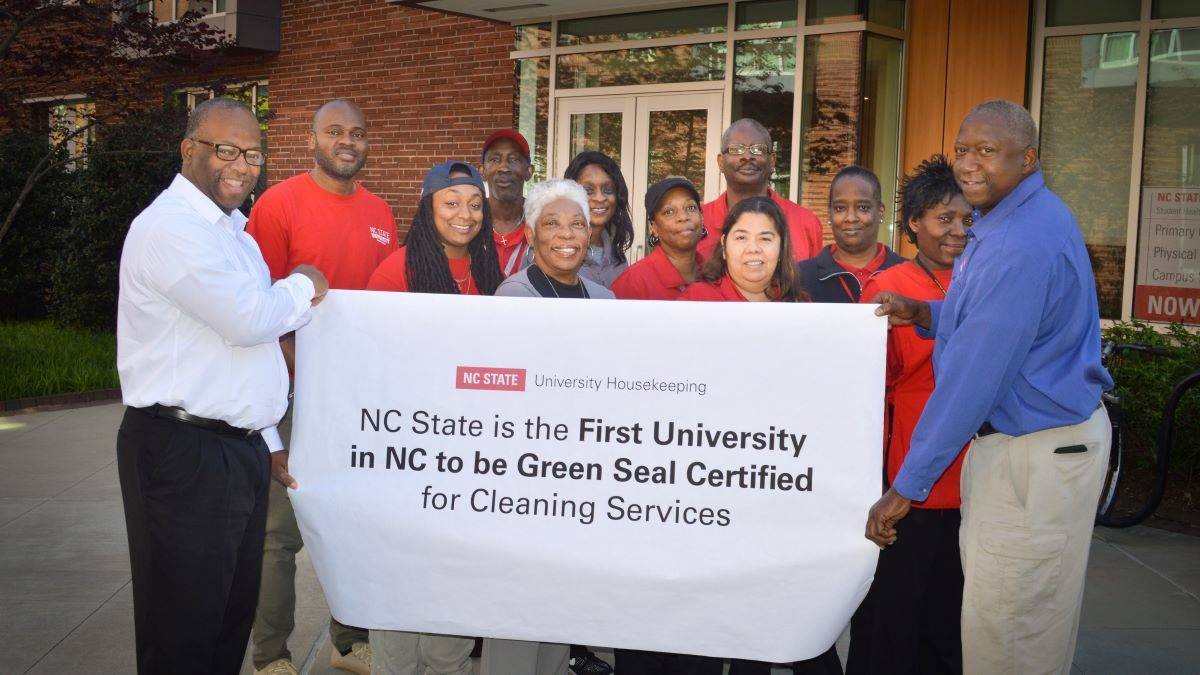
North Carolina State University’s certified green cleaning program has generated a host of benefits for the campus community, including improved air quality, reduced operational costs, and improved employee health and morale. To maintain Green Seal certification, University Housekeeping will be reevaluated annually to ensure its cleaning products, processes and employee training meet leadership levels.

PILOT GREEN-CLEANING PROJECTS LED TO CAMPUS-WIDE ADOPTION

 “NC State began its shift toward green cleaning more than a decade ago as increased awareness of environmental and human health prompted many manufacturers to develop eco-friendly options. First, University Housekeeping tried a chemical-free cleaning solution made of ionized water and salt. Not only did it work on campus, but it saved money and was safer for building occupants and housekeeping employees. With that success, NC State continued pilot green projects that led to campus-wide adoption. Housekeeping also found safe, effective alternatives to aerosols and harsh chemicals. They use many Green Seal certified cleaning chemicals and hand soap to protect indoor air quality and reduce chemical exposure.”
CARLA DAVIS
University Sustainability Office

WE’RE LOOKING OUT FOR THE HEALTH OF OUR EMPLOYEES, CUSTOMERS AND THE ENVIRONMENT

“We’re looking out for the health of our employees, customers and the environment. What makes us stand out is that we adopted green products early and saw benefits early. We were very progressive in making our products and processes better.”
HEZEKIAH HENRY
Supervisor – University Housekeeping

We’re looking out for the health of our employees, customers and the environment.

GREEN SEAL EXAMINES ABSOLUTELY EVERYTHING YOU DO

“Green Seal examines absolutely everything you do. They verify every chemical, every piece of equipment, your cleaning process, your training program. They leave no stone unturned. It is rigorous and comprehensive and helped us standardize our cleaning program in every building. This certification shows our commitment to sustainability and helps us become a leader.”
VINCENT TAYLOR
Deputy Assistant Director – University Housekeeping

GREEN SEAL CERTIFICATION HAS GIVEN OUR STAFF GREATER PRIDE IN WHAT THEY DO

“Our staff have to know the reasoning behind our process and the difference between cleaning and green cleaning. There’s a lot that goes into that, and Green Seal certification has given our staff greater pride in what they do.”
TONY BROWN
Supervisor – University Housekeeping

I COULD NOT BE PROUDER OF THE ENTIRE UNIVERSITY HOUSEKEEPING TEAM

“Green Seal Certification affirms our dedication to sustainability and the health of our employees and the campus community. I could not be prouder of the entire University Housekeeping team.”
ADA BALDWIN
Director – University Housekeeping

OUR EMPLOYEES HAVE LESS CHRONIC ILLNESS AND ERGONOMIC PROBLEMS

“Our industry is much more concerned with employee health than it was before. With our green cleaning program, our employees have less chronic illness and ergonomic problems.”
TAFT WALDON
Deputy Assistant Director – University Housekeeping

BMS Cleans Over 100 Million Square Feet of Space

WHAT DOES SUSTAINABILITY MEAN TO BMS?

Because the environmental impact of the janitorial industry is so enormous, so is our potential to reduce it. As a responsible company committed to sustainability, it’s our obligation to offset this however we can. Annually the janitorial industry consumes 6.2 billion pounds of mostly petroleum-based chemicals. Additionally, our industry goes through about 30 million trees worth of sanitary paper and one billion pounds of equipment. Not to mention a huge amount of packaging and equipment is disposed of each year.

WHY DO YOU PRIORITIZE GREEN CLEANING?

It’s no longer a trend, but an expectation. While BMS is leading this effort, we now see that almost all cleaning companies have green cleaning programs. The benefits reach beyond statistics. Green cleaning has a significant impact on the health of janitorial workers and building occupants who are now breathing cleaner indoor air with less exposure to harmful chemicals that can cause asthma and other serious health conditions.

Being Green Seal certified gives BMS leverage with prospects. In a competitive market, being able to showcase points of differentiation is key. Our BMS Green Clean℠ program was designed to enhance human health and foster sustainability within the commercial real estate, hospitality and education spaces we clean.
WHY DID YOU PURSUE GREEN SEAL CERTIFICATION? 

Third-party auditing from Green Seal demonstrates our commitment to transparency and accountability in our operations. It’s critical to us that our sustainable practices and procedures are best-in-class. Being Green Seal certified is an important part of ensuring we maintain our standards. It helps us ensure sustainability becomes a part of our corporate culture. Our staff receives annual Green Seal training, which results in companywide buy-in. And regular Green Seal recertification ensures our continued adherence to best practic

DO YOU HIGHLIGHT YOUR GREEN CLEANING PRACTICES WITH CUSTOMERS?

Being Green Seal certified gives BMS leverage with prospects. In a competitive market, being able to showcase points of differentiation is key. We are proud to share our sustainability practices with our customers! Our BMS Green Clean℠ program is Green Seal certified, and was designed to enhance human health and foster sustainability within the commercial real estate, hospitality and education spaces we clean.

DOES CLEANING WITH GREEN PRODUCTS COST MORE?

It is a common misconception that green products are more expensive and less effective. This is false. These products are never more costly than traditional chemicals, and are equally, and in many cases more, effective. In fact, when used properly, they should cost less. Microfiber dusting cloths, dilution control systems, efficient machinery and ample staff training provide tangible savings. The only cleaning program offered by BMS is a sustainable one. We have built green cleaning into our everyday operations and clean to LEED standards all the time.

HOW ARE YOU DOING ON OFFSETTING YOUR ENVIRONMENTAL IMPACTS?

We annually track our sustainable efforts using the tools available to us. Our last Sustainability Report outlined the following environmental savings, and we have Green Seal to thank for helping us achieve these statistics: 

  • 81% purchasing of Certified “Green” products 
  • 92.8 tons of packaging reduction by purchasing chemical concentrates 
  • Over 531,551 gallons of water use reduction 
  • Use of 2.3 million pounds of recycled paper 
  • 1,500 of gallons of chemical reduction 
ANYTHING ELSE YOU’D LIKE TO SHARE?

BMS cleans over 100 million square feet of space across New York, Chicago and the Mid-Atlantic. The statistics show that it is essential that our industry act now by investing in green cleaning practices. Collectively, we can make a tremendous impact. All of us, businesses and individuals, have a part to play in protecting the environment.

Harsh Cleaning Chemicals Have No Place in Our Schools

Many Americans are familiar with “Code Orange” days, when the air outside is so dangerous that school officials keep kids indoors. But what if the air quality inside our schools is just as much of a concern? That’s the case in half of our nation’s schools where the EPA found poor indoor air quality is putting children’s developing bodies at risk every school day. Poor indoor air quality is linked to asthma, concentration problems, and even poor test results. Unhealthy indoor air stems from a number of maintenance and design issues, but the good news is that one of the major contributors is also the easiest to address: the toxic chemicals in conventional cleaning products. Ironically, schools that are trying to protect the comfort and health of children and staff with regular classroom and facility cleaning are inadvertently doing more harm than good. That’s because even when they’re advertised as “green” or “natural,” cleaning products can contain a toxic stew of chemicals and volatile organic compounds (VOCs) that are linked to asthma, allergies, cancer, and harm to our reproductive and nervous systems.

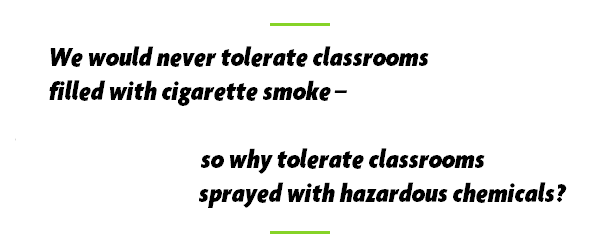
Peer-reviewed studies have found that children who are frequently exposed to conventional cleaning products suffer higher rates of wheezing and asthma. With asthma forcing children to miss 14 million school days each year, asthma-attack-inducing chemicals have no place in our schools. Long-term research also shows that adults who clean their homes with conventional cleaning products cause as much damage to their lungs as if they smoked a pack of cigarettes a day. We would never tolerate classrooms filled with cigarette smoke – so why tolerate classrooms sprayed with hazardous chemicals? Schools should provide safer environments for our children and protect their health. For decades, Green Seal has been a vital resource for school districts, colleges, and universities across the country, helping to transform campuses into cleaner, healthier places to live, learn, and play. Nearly half of U.S. states and thousands of schools and healthcare facilities specify Green Seal as a trusted name that defines healthier products. Custodial teams know that Green Seal certified products deliver the same effectiveness as conventional ones – from cleaning products to paints, coatings, and construction materials.

Now, our Healthy Green Schools initiative is helping schools like Harvard University and Howard County Public Schools demonstrate that they are providing the healthiest indoor air quality for their students and staff. These schools and programs are achieving Green Seal certification for their cleaning programs to prove that they meet the highest standards of health and sustainability in the US. By meeting each and every requirement in Green Seal’s GS-42 Standard for Commercial and Institutional Cleaning Services, school cleaning teams are demonstrating leadership in key areas: green purchasing, green cleaning procedures, undergoing vital trainings, properly maintaining equipment, and helping our towns and cities reduce their environmental footprint through waste minimization practices. Every child has a right to learn in a place where they can thrive, and that means schools with safe, clean air to breathe. On Healthy Schools Day, school leaders can take the first step by making a district-wide commitment to purchase only certified green cleaning products and to provide Healthy Green Schools for all children.

Updated Paper Waste Standards Deliver Big Environmental Wins

It’s a simple but harsh truth: America has a paper waste problem

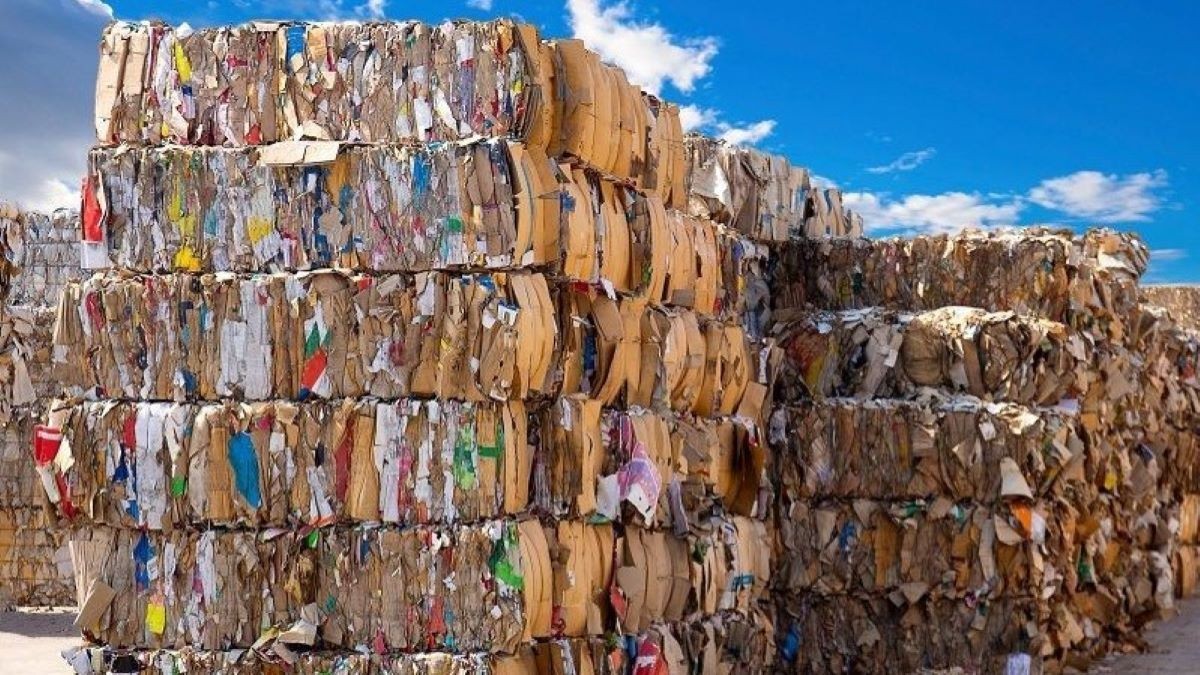
Americans throw out 68 million tons of paper each year – that’s 417 pounds per person. Until this year, the U.S. could handle this immense volume by shipping one-third of our waste to China, but due to new Chinese policies, almost all of that refuse is now staying in the US and going straight to our landfills. The paper that we recycle each day shouldn’t be sitting in landfills when it can be processed and used to create new products – but it will continue to pile up unless we rise to the challenge by choosing paper products made from recycled material.

Facility Managers and Procurement Pros: You have an important role to play

Lower your building’s environmental footprint and help all of us tackle the paper waste challenge by making greener purchasing choices, like choosing Green Seal certified sanitary paper products to make sure that you’re getting the highest percentages of post-consumer recycled content.

This simple choice will immediately lower the environmental impact of your building operations and clearly demonstrate a facility-wide commitment to solving our national paper waste issue and to conserving precious natural resources – our forests. Green Seal has made it simple for you to make the greenest choice because we’ve done the hard work. We’ve conducted extensive research to ensure that our standards accurately reflect the highest levels of leadership on today’s market: the greenest feasible fiber content, a chlorine-free papermaking process, a low energy and water-use manufacturing process, ingredients that are significantly safer for human health, and verified performance that users appreciate.

Over the last 20 years, more and more manufacturers have stood up to our challenge – and undergone our thorough certification process – to prove that their sanitary paper products meet each of the 12 major best practices that Green Seal has identified as key impacts within the product lifecycle. The results of your greener paper purchases can be ballparked with help from the Environmental Paper Network. According to Portland’s Sustainability At Work program, For a 120-person office, over one year, your company will save 8,700 trees, 1 million pounds of emissions (the equivalent of removing 100 cars from the roads), and 5.6 million gallons of water. Those green brags are easy wins that you can include in your annual sustainability metrics report.

Continuous Improvement in Environmental Benchmarking

To make sure that we’re supporting today’s environmental challenges, Green Seal implemented a major review of the GS-1 standard, and today we’re relaunching it as Edition 6.2.

With direct feedback from manufacturers and end users, the standard is now more in-line with industry practices. We’ve removed the unintentional barriers to certification, expanded number of pathways for compliance, improved the readability of the standard, and maintained the stringent level of protections for human health and our environment. With these improvements, we are now off to the races, setting the stage for a major shift in this industry. With feasible leadership standards, Green Seal is incentivizing higher rates of landfill diversion and certifying a wider selection of bath tissue, paper napkins, tray liners, and other sanitary paper products that we use every day. Purchasing Green Seal-certified products is a simple choice that can have tremendous impact on our environment. From facility managers to restaurant owners to everyday consumers, making simple changes in our purchasing habits can help significantly reduce waste and stabilize the U.S. recycled paper market. We urge you to join us in making this change, because it’s up to us to reduce our waste footprint and ensure that we have a healthy planet for generations to come.

Green & Glamour Go Together for Certified Sofitel LA

The Sofitel Los Angeles at Beverly Hills is the definition of luxury — an urban oasis surrounded by the decadence and glamour of West Hollywood, California. Through ongoing sustainability initiatives, their staff have learned that you don’t have to sacrifice guest experience or quality of service to be green. In fact, being green can improve guest enjoyment and impart a lasting impression that keeps them coming back. In this interview, Rex Umbay, the hotel’s Director of Engineering, sits down with Green Seal’s own Cerise Bridges to discuss why sustainability is important, shares the lessons he’s learned through the hotel’s sustainability journey, and offers practical “how-to” advice for other hotels looking to go green. 

Cerise Bridges: Thanks so much for taking the time to share your experience and insights with us, Rex.  Let’s start with the basics.  Could you give a quick snapshot of the building – the year it was built, recent renovations, etc.?

Rex Umbay: The building was originally built in 1988 as a Sofitel, part of the AccorHotels Group, and was fully renovated in 2006. Soft renovation projects have been taking place since then, including a full renovation of our food and beverage areas (bar and restaurant). 

CB: When did the hotel begin to go green and why was it important?

RU: AccorHotels has been pioneering green initiatives and leading sustainability in the hospitality industry since 1994, when its Environment Department was created. In 2002, the Sustainable Development Department was formed, and in 2011, an action plan came to fruition as the Planet 21 program. Planet 21 consisted of 21 sustainable key actions and granted 4 levels of certification to hotels successfully executing certain initiatives. It is at this time that the Sofitel Los Angeles at Beverly Hills made eco-friendly initiatives its number one priority – and nothing has changed since then. Being green is still our own hotel’s main objective — we have a great responsibility to balance our activities with eco-friendly practices. This positive environmental impact starts at the property level. Now, more than ever, we are working on sustaining and improving our green initiatives.

CB: What is one thing you’ve learned during the process and do you have any advice for hotel managers who are just beginning the process of greening their properties?

RU: Without a doubt, sustainability has become a global trend. Customers highly consider your sustainability initiatives when making their decisions on where to stay or conduct their business. Gaining recognition for our actions with green certifications is very honorable, but it is just the beginning. This is why we did not slow down or stop innovating when we received our 4 keys Green Key certification and Green Seal® SILVER Certification, and why we did not stop when our restaurant received the LA Green Business certification. Our guests don’t stop thinking about the planet, why should we?

The advice we would share includes:

1. Check your city, learn what the sustainability initiatives/programs are and take advantage of them — they can help you. Here in Los Angeles, we have the LA Green Lodging Program (LAGLP), a collaboration of the Mayor’s Office and key LA City agencies to encourage hotels to earn Green Seal certification and provide financial incentives. In addition, the LA Department of Water and Power (LADWP) helped us with our lighting and water-saving fixtures upgrades.   

2. Your state may have sustainability regulations that are currently in place. Know them and they will guide you. You may be pleasantly surprised that you are already abiding by them.  Also, be sure to ask your utility provider about their rebate program and take advantage of its offerings if feasible.  

3. Look for certification guidelines from organizations like Green Seal and Green Key and do an in-house audit. Self-examination is the first step to success.

4. Start the process now. There are a lot of organizations out there ready to help.

CB: Because managers can’t do it alone, how do you involve staff and keep them interested and active in the process? Why is this important?

RU: Although the Planet 21 committee and myself are leading the greening process, it is important that all hotel employees are supportive of our green initiatives for them to succeed. Before people can change their habits, whether in the workplace or at home, they need to understand the affect that their actions will have. For this reason, our hotel hosts awareness campaigns for employees to participate in year-round. Earth Hour, Earth Day, World Food Day, and many others are celebrated not only at Sofitel Los Angeles, but also within our Sofitel brand and the entire AccorHotels Group. The celebrations are perfect opportunities for us to explain to the staff why our green actions are so important. Whether meeting with our green partners, detailing the recycling processes, or participating in gardening sessions, the key takeaways are keep people interested in what we do and why we are doing it, not only for the hotel, but for the planet. We also emphasize the fact that our daily activities have a real impact on our community, and that going green also involves a social responsibility. By choosing local environmentally-responsible vendors, whether it is for food products or for printing services, we support the local businesses while reducing our carbon footprint. Think globally, act locally!

CB: What do you still want to accomplish for the hotel?

RU: As mentioned earlier, there are always more ways to improve eco-friendliness and sustainability. We have a couple of new objectives for this year: plant a vegetable garden on our rooftop and replace our major mechanical equipment with energy-efficient units, including our chillers and cooling tower. We are just a few steps away to reaching the highest level of the Planet 21 program and becoming platinum certified, and we hope to succeed this year! We have full support from AccorHotels on this project, as sustainable development is a priority for them now more than ever. Every hotel within this group is willing to exchange ideas for new practices and technologies to become greener — we believe that solidarity is key to accomplishing our goals.

CB: Have you had the opportunity to quantify the benefits of your sustainability initiatives?  Any fun stats to share re: water or energy savings (esp. since the lighting upgrade and energy management system), reduced waste, etc.?

RU: Since we started to work on our sustainability, we have saved about 868,793 KWh energy annually (about $121,631/year), about 9,375 HCF water annually (about $49,400/year), plus annual trash reductions of about 24 tons (about $13,750/year). As a result of our cardboard bailer being installed in fall of 2017, we now recycle an average of 4500 pounds per month, with savings of 30% on trash disposal. And due to the installation of our ORCA machine, a unique food waste recycling technology, we have managed to reach zero food, with all food waste composted in-house. The ORCA is housed in a stainless-steel container, and its proprietary, natural microorganism solution works with water and recycled plastic Bio Chips to quickly break down the waste. Through a process called “aerobic digestion,” the ORCA technology constantly churns the material, adding oxygen that accelerates its transformation into earth-friendly water. Within 24 hours, this technology turns food waste into environmentally safe water that flows straight into the municipal sewage system. At Sofitel Los Angeles, we are able to compost an average of 200 pounds per day, and 6,000 pounds per month, with the ORCA machine. The numbers really do say it all! And because we believe sustainable behavior goes hand-in-hand with strong social responsibility, our partially-used personal amenities (shampoos, gels, conditioners and lotions) are donated to the Greater West Hollywood Food Coalition and redistributed to the local homeless shelters, at an average of 400 pounds per quarter.  Another social responsibility initiative was signing EPCAT’s Tourism Child Protection Code of Conflict to help prevent the sexual exploitation of children. This code is framed at our front desk, and trainings are regularly done with our employees on how to identify and fight the sexual exploitation of children.

CB: How do you involve guests in the hotel’s green initiatives? Why is this important? What type of feedback have you received from guests regarding the hotel’s green initiatives?

RU: Our guests are the judges and the promoters of our green initiatives, therefore, it is paramount that they are aware them. At Sofitel Los Angeles at Beverly Hills, aside from the usual informative techniques like in-room flyers, we promote a lot our green actions and our green successes on social media platforms. Our social channels are the perfect communication tool to share daily details about our property and create excitement that reaches people on a national and international level. With the use of online promotion techniques, we can reach thousands of potential guests who are looking for greener lodging options. We know that being green is now a very important component for our guests, so we make sure to incorporate our green actions and successes in every step of the customer journey, from the reservation to the post-stay survey. We make sure our staff is fully aware of our green initiatives and can answer all questions posed by our guests during their stay. We now provide full training on our green actions during employee orientation. 

CB: What sort of challenges did you overcome when converting and updating systems? Were there any surprises (good or bad), such as the pipes were in better condition that you thought, or the lighting/wires weren’t salvageable, etc.  What achievements are most notable or make your team the proudest?

RU: We thought that our initial investment in upgrading existing lighting and water fixtures into energy-efficient ones would be our biggest challenge, but it quickly became our biggest achievement.  By taking advantage of a program through our utility vendor, which in our case was LADWP, we were able to upgrade to energy- and water-efficient light bulbs and fixtures with little to no cost to us! This great discovery prompted a sense of optimism in our staff, as they realized the amount of support we had from the city, and it meant a lot to them. By the city demonstrating its immense care for helping us reach our goal, the staff was able to better understand that they were not alone in the process, which encouraged them to increase their efforts in making our property even greener. 

CB: Of the sustainability upgrades that you’ve made, what has produced the quickest ROI?  What has produced the biggest ROI over time?

RU: As we were implementing our green actions, we quickly realized that some of our projects had an instant ROI, like the lighting upgrade. As mentioned, this was made without an initial investment from the hotel. LADWP calculated the savings of upgrade and gave rebate incentive that covered installation and light bulbs. They took care of everything, which was life-changing for us, and did the same thing for the water-efficient toilet upgrade.  Additional ROI successes are our cardboard bailer and ORCA food waste technology, which pay for themselves on a monthly basis through the savings of trash disposal – they’re incredible! All of these projects are very satisfactory from a financial standpoint as well as a motivational standpoint. You can quickly see the positive results, which helps employees and our partners envision what we set out to accomplish. 

CB:  What are the top three benefits you’ve seen from implementing such a strong sustainability program?  

RU: Our most valuable benefit would have to be the savings – both in terms of money and carbon footprint — from these green initiatives. The figures really speak for themselves.  Another great benefit we have reaped since earning Green Seal® SILVER Certification and implementing the sustainable actions it requires, is the increased ability to answer to companies’ proposals. Big corporations and technology pioneers like Google or Microsoft have substantial environmental charters in place and want their partners to be the same. We are now aligned with their green criteria and are eligible to host their events.  The final benefit is really the engagement of our employees. The excitement and satisfaction they portray when helping the community and the planet is beyond rewarding.

CB:  Any additional stories or anecdotes you’d like to share regarding the hotel’s sustainability journey…?

RU:  Last year, on World Food Day, we displayed some salad towers on our garden patio and then collected the salads to serve them to our employees in our cafeteria during lunch break. We had prepared the salads with fresh items from our garden on the patio, so we served a delicious salad that was grown and made in house! Our employees were very happy about this initiative and curious about the process. Their elation gave us the idea to extend this concept at a higher level and develop a rooftop garden, which is now part of our 2018 objectives. Ideas truly grow, like seeds in a garden! (Pun intended.)

Of the many reasons to go green, the Sofitel Los Angeles at Beverly Hills has shown that active and engaged staff can really make a difference in a hotel’s green program, and that there can be major benefits to a hotel’s bottom line.  By providing a healthier environment for guests and staff and improving efficiencies in hotel equipment and operations, a hotel can also reduce turn-over, potentially increase the number of reservations and event bookings, and save money and precious natural resources along the way. 

The good news is that there is no right or wrong way to begin to green your property. Every effort made to upgrade old systems, purchase greener products, and increase efficiency is a step in the right direction. 

As Rex says, “Start now. Look for organizations or government programs that are willing to help and take advantage of what they have to offer.” Your own region may offer incentives and tools like Los Angeles’ Green4Green grant money, LADWP’s lighting and water fixture rebates, and LA Better Buildings Challenge’s assistance with water and energy benchmarking requirements.  Also, don’t be afraid to get creative.  A big part of sustainability is innovation.  What works for one property may not work for another.  Whether you have 10 rooms or 1000, it is never too late to begin your sustainability journey and no act is too small to make a difference.  

Reprinted from the Hotel Business Review with permission from www.HotelExecutive.com.

Update: TCSA (Toxic Substances Control Act) Amendment

Recently, Green Seal’s standards development team attended a conference on the Frank R. Lautenberg Chemical Safety for the 21st Century Act, which celebrated its 1-year anniversary. We greatly enjoyed the candid conversations between the heavy hitters: government officials, members of Congress, representatives from industry, and environmental advocates.

The bill was signed into law on June 22, 2016 by President Obama, and was widely proclaimed a success. Soon after the signing, the usual political chatter began: cheers (a rare show of bipartisanship!), grumbles (the law was decades overdue), jitters (could the EPA handle the ambitious time lines?), shrugs and yawns (too many compromises). We, in Green Seal’s Washington, DC’s headquarters, sometimes enjoy the political opera, especially since we remain happily seated in the mezzanine. I, and my friends in the DC environmental community, were heartened by the news: the EPA now had greater authority, strict time lines for progress, and dependable funding sources for implementing effective chemical regulation.

Chemical Safety, The Previous Version

The law is an update and expansion of the 1976 Toxic Substances Control Act (TSCA) (“Ta-Ska”), which defined the federal regulation of chemicals. Unlike the other major environmental legislation of the 1960s and 70s (The Clean Air Act, the Clean Water Act, CERCLA, RCRA, etc.) which responded to pollution and hazardous chemical releases after the fact, TSCA was intended to prevent hazardous chemicals from entering the market. The EPA was authorized and required to track chemicals that were being manufactured or processed, to evaluate new chemicals for health and environmental impacts, and to regulate (restrict, ban or in some way control) those chemicals that were identified as hazardous. TSCA implementation was slow and often ineffective because of legal loopholes, an overworked and underfunded agency, and general disinterest among members of Congress. Pushed to fill what they saw as a public health protections gap, state health departments and legislative bodies established state-wide chemical regulation programs, which sometimes caused confusion and frustration for product companies and chemical suppliers. With a goal of simplifying and re-nationalizing US chemical regulation, TSCA reform became a priority for businesses and chemical manufacturers. From 2009 to 2016, members of Congress, environmental advocates, and industry groups worked on the reform bill, and ultimately passed the Lautenberg Act in the House of Representatives with a vote of 403 to 12, and passed the Act in the Senate with a voice vote.

About the Lautenberg Act (TSCA Amendment)

  • The EPA no longer needs to identify a regulatory action that is “least burdensome” to industry when carrying out a chemical ban, restriction, or exposure reduction measure.
  • The EPA is no longer required to conduct a cost-benefit analysis along with its chemical assessments, and is, in fact, prohibited from factoring in the financial impacts of a regulatory action.
  • The Act requires the EPA to protect vulnerable populations: “”the health of children, pregnant women, the elderly, workers, consumers, the general public, and the environmental from the risk of harmful exposures to chemical substances and mixtures.” One year in, the EPA has made real progress.
  • June 22, 2017: The EPA issued Final TSCA Framework Rules (National Law Review)
  • Announced the scopes of the risk evaluations for the first ten chemicals (EPA)
  • Dozens of new chemical determinations were completed in June 2017 and nearly 1,000 new chemical determinations were completed from June 2016 to June 2017 (EPA – Actively updating the number of completed determinations).

Green Seal’s Chemical Considerations

The ongoing implementation of the Lautenberg Act has had no direct effect on Green Seal, our standard development, or our product evaluation processes. In their chemical assessment process, the EPA is identifying and regulating the most harmful chemicals; Green Seal is defining and validating the qualities of environmental leadership products – that they are formulated with safer chemicals, perform effectively, and have an overall lower environmental and health impact. However, TSCA Reform may eventually lead to a change in Green Seal’s standards. If the floor for chemical safety rises in the US market, we may see a significant shift in the formulations of all products, and further improvements to leadership products. If this shift takes place, Green Seal will update our standards in order to accurately reflect the new levels of leadership.

A Different Level of Scrutiny: While the EPA conducts risk analyses, Green Seal emphasizes chemical hazards. One of our major goals of product certification is to encourage the elimination of hazardous chemicals on the US market.

Identifying New Chemicals of Concern: In our product reviews, Green Seal ensures that products are not formulated with persistent / bioaccumulative / toxic substances (“PBTs”) and one way that we accomplish this is by noting the chemicals of concern that are listed in the EPA’s Toxics Release Inventory. As the EPA gathers and reports the results of toxicological evaluations, new PBTs may be identified, which would better inform our evaluation.

A Clearer Evaluation Process for Companies: Companies with Green Seal-certified products will benefit from a clear and consistent framework for the evaluation of chemical substance and the associated risks, and from the new data that will result from the evaluation process. (Looking through rose-colored beakers…) Perhaps TSCA Reform will also spur green chemistry innovations, increasing the numbers of safer substitutes, and simplifying the process of developing safer formulations.


To learn more about TSCA Reform, the Lautenberg Act, and EPA’s progress since June 2016, check out the following links:

Study Quantifies GHG Reductions of Certified Hotels

In a market full of different certifiers, it is important for hotels to distinguish between a green-washed standard and one with real environmental benefits.

Green Seal recently collaborated with the Bren School of Environmental Sciences and Management at the University of California, Santa Barbara, on a year-long study to quantify the environmental benefits (in terms of greenhouse gas [GHG] reductions) for hotels in the City of Los Angeles that are certified under Green Seal’s hotel standard (GS-33).

Let’s go back a few years to get the full picture…. in 2008, the City of Los Angeles recognized the role hotels can play in reducing the city’s overall GHG emissions, and created the Los Angeles Green Lodging Program (LAGLP) to meet its Climate Action Plan goals.  Green Seal was selected as the official certifier for the LAGLP, which now has 7 certified participating hotels including: JW Marriott Los Angeles LIVE, Hilton Universal City, Hilton Los Angeles Airport, Sheraton Gateway, Crowne Plaza, Westin Bonaventure, and Westin Los Angeles Airport. Los Angeles now has more Green Seal-certified hotels than any city in the nation (over 6 million square feet certified), with a number of additional hotels in the process of getting certified.  Until the recent Bren Study, however, neither the City nor Green Seal had a quantitative metric of the environmental benefits of the LAGLP.

The Bren team used electricity consumption data from 6 certified hotels in Los Angeles, and found that on average:

  • entering at Bronze level saw 2.8% reduction in GHG emissions,
  • those progressing to Silver saw an added reduction of 8.8% (hotels entering directly at Silver would see a 2.8% + 8.8% = 11.6% reduction)
  • those progressing to Gold saw a further reduction of 18.2% (hotels entering directly at Gold would see a 11.6% + 18.2% = 29.8% reduction)

The Bren team took this study one step further to see how Green Seal certification benefits a hotel itself. They conducted surveys of over 1000 participants and found that consumers were willing to pay $6.50 more per night for hotels with demonstrated sustainability measures.

A case study by the Bren team showed that meeting the most basic requirement in the GS-33 standard of upgrading lighting (mandated by the Bronze level), can reduce a hotel’s emissions by a total of 1,066 MT CO2 annually, which is equivalent to emissions from 225 passenger vehicles driven for a year. Furthermore, these replacements reaped financial benefits as well: over a 20-year project cash flow period, the hotel would see $1,562,157 in cumulative savings from avoided utility costs.  Hotels can target lighting upgrades as “low-hanging fruit” thatyield higher benefits than costs. 

Green Seal avoiding C02

Finally, the Bren team also created a user-friendly Excel-based tool that can be used by an individual hotel to calculate its GHG reductions and financial savings from different energy and electricity reduction projects undertaken because of Green Seal certification. This tool can be used by hotel managers and engineers to calculate their GHG and long-term financial savings.

As hotels across the globe increasingly embrace green practices, it is important for the lodging industry to pursue practices with real environmental benefits. Hotels can be one of the most energy and GHG intensive buildings, as they tend to keep lights on throughout hallways at night or run thermostats even when there are no occupants in the room. Green Seal’s GS-33 Hotels and Lodging Properties standard requires hotels to upgrade their energy intensive equipment and to integrate sustainability practices in their daily operations.

The Bren study strengthens the findings of an independent study by Washington State University, which stated that:  “The single most important thing is to become certified by an independent and credible agency such as Green Seal and Leadership in Energy & Environmental Design (LEED), the major certification programs in the lodging industry.”

Green Seal - Bren Study

Your Feedback Is Key to the Success of Our Standards

Over the past twenty-seven years, Green Seal has published dozens of environmental leadership standards and certified over 4,000 products. We have achieved the most success over these years in the cleaning product industry, and have invested greatly in helping manufacturers green their products. About one-third of our 27 active standards define environmental leadership for specific types of cleaning products. For cleaning product manufacturers and for institutional purchasers, Green Seal is a well-known product certifier. Our services are trusted and respected, and the Green Seal Certification Mark is a widely recognized symbol that shows that a product has been evaluated for both performance and environmental leadership. A key facet of our success has been that our certification process is transparent and scientific; certification is based on our accurate and publicly available environmental leadership standards.

Transparent Requirements to Achieve Certification 

To understand Green Seal certification, anyone can download a specific standard (a free PDF on our website) and note each of the requirements for performance, human health protection, and environmental leadership. For example, purchasers know that a Green Seal-certified cleaning product has demonstrated a specific level of performance, that it is not formulated with certain hazardous substances, and that it has an overall reduced environmental impact compared to most other products on the market.

A Bit of Maintenance: Keeping Our Standards Clear and Accurate

The guiding principles of a Type 1 Ecolabel require us to keep each of our standards relevant to today’s market, to ensure that they accurately define environmental leadership, and also to verify that the requirements are practical for certification. Our periodic assessments of each standard also include a review of the market to identify if relevant technologies and best practices have evolved. Green Seal references many external sources in our standards that make a revision necessary: ASTM and ISO update the names and criteria of their test methods; the OECD updates their suggested methods for evaluating chemicals, and the US EPA often increases the size and complexity of its environmental databases in response to newly published scientific studies. Also, the market is continuously evolving. Manufacturers are always developing new technologies and re-designing their products. For example, over the years companies have expanded their offerings of environmentally-preferable packaging. Source-reduced packaging, packaging take-back programs, and packaging made from higher percentages of post-consumer materials are being used by environmental leaders in the cleaning industry now, but were not widely available a decade ago. For our standard revisions, we note these types of changes and gauge whether an update is necessary.

Our 2016 – 2017 Standard Revision: Improving Nine Cleaning Product Standards

On November 15, we published a document with the proposed revisions to our cleaning product standards and opened the Public Comment Period. As a Type 1 Ecolabel that provides an independent and life-cycle based evaluation, we actively engage the public in our revision process. When each standard is developed, and again when each standard is revised, we widely announce a Public Comment Period. During this eight-week period (sometimes longer!), we promote our “Proposed Revisions” and request feedback from any interested individual, organization, or company.  We often receive detailed comments from product manufacturers (some with and some without Green Seal-certified products), product evaluators, advocates in public health, and experts from environmental organizations. Many individuals stay tuned in to ensure that Green Seal’s standards maintain the same level of stringency, and others chime in to make sure that our requirements describe a practical evaluation. Institutional purchasers stay involved in order to ensure that they can still depend on Green Seal-certified products as a way of obtaining their group’s sustainability goals.

…And the Comments Pour In

During the Public Comment Period, we encourage comments that directly reference our proposed revisions (nothing outside of the scope, please); comments that are science-based; a realistic viewpoint of industry; and comments that helpfully reference scientific or technical information. We have received supportive comments, neutral comments about editorial improvements or the flow of a standard, and critiques, and all help us to evaluate our proposed revisions. After we close the Public Comment Period, Green Seal publishes our “Response to Comments” document which includes each comment that was submitted through our online forum, and provides our direct reactions. Sometimes we are able to respond to each submitted comment but in some cases we provide one response to a group of comments that touch on the same issue. In our responses, we try to clearly state: Yes, the comment resulted in a change in the standard, or, No, we’re going to proceed as we originally proposed. For both cases we describe our reasoning. Sometimes, we also get in touch directly with the commenter to provide a more elaborate reaction to help them better understand our perspectives, our goals, and also to hear from them about their concerns and their reasoning. These types of conversations are greatly beneficial, and help us to stay informed on the issues and perspectives of our stakeholders.

Stay Engaged, Add Your Comment, and Encourage Feedback

Do you have expertise in the performance, or environmental and health impacts of cleaning products? Do you have a specific interest in one of our proposed revisions? We welcome you to register on our online forum and provide your comments. This is your chance to help define environmental leadership for the cleaning industry. If you do not have expertise in these topics or a strong understanding of the issues that are being proposed, but you are strongly interested in promoting environmental leadership, consider reaching out to a health or environmental organization, or to your favorite cleaning product brand, and ask them to provide their input on our proposed revisions. Our standards and certification process play a major role in reducing the environmental impacts of your state governments and schools, and help drive environmental improvements in the cleaning industry.